Will My Safe Florida Home Pay for Your New Roof? Yes, but Only as Part of a Wind Upgrade
 Chris Marlatt··8 min read
Only as part of a wind upgrade. My Safe Florida Home can put up to $10,000 toward a full roof replacement when the old roof has to come off to install the upgrades the program covers: secondary water resistance, stronger roof deck attachment or roof-to-wall connections. A reroof on its own, a patch or a partial repair does not qualify. The home has to be a homesteaded, site-built single-family home built before 2008 and insured for $700,000 or less, and you need a free state wind mitigation inspection and grant approval before any work starts.
- The grant tops out at $10,000. Moderate-income homeowners put in $1 for every $2 from the state, and low-income homeowners don't have to match at all.
- A new roof counts only when the covering has to come off to add secondary water resistance, stronger deck attachment or roof-to-wall connections.
- Patches, partial repairs and any work started before grant approval are not reimbursed.
- Grant homes must be homesteaded, site-built single-family homes built before January 1, 2008, insured for $700,000 or less, with a low or moderate household income.
- The money comes after the job: you request payment once the work passes its final inspection, and the work must be finished within 18 months of approval.
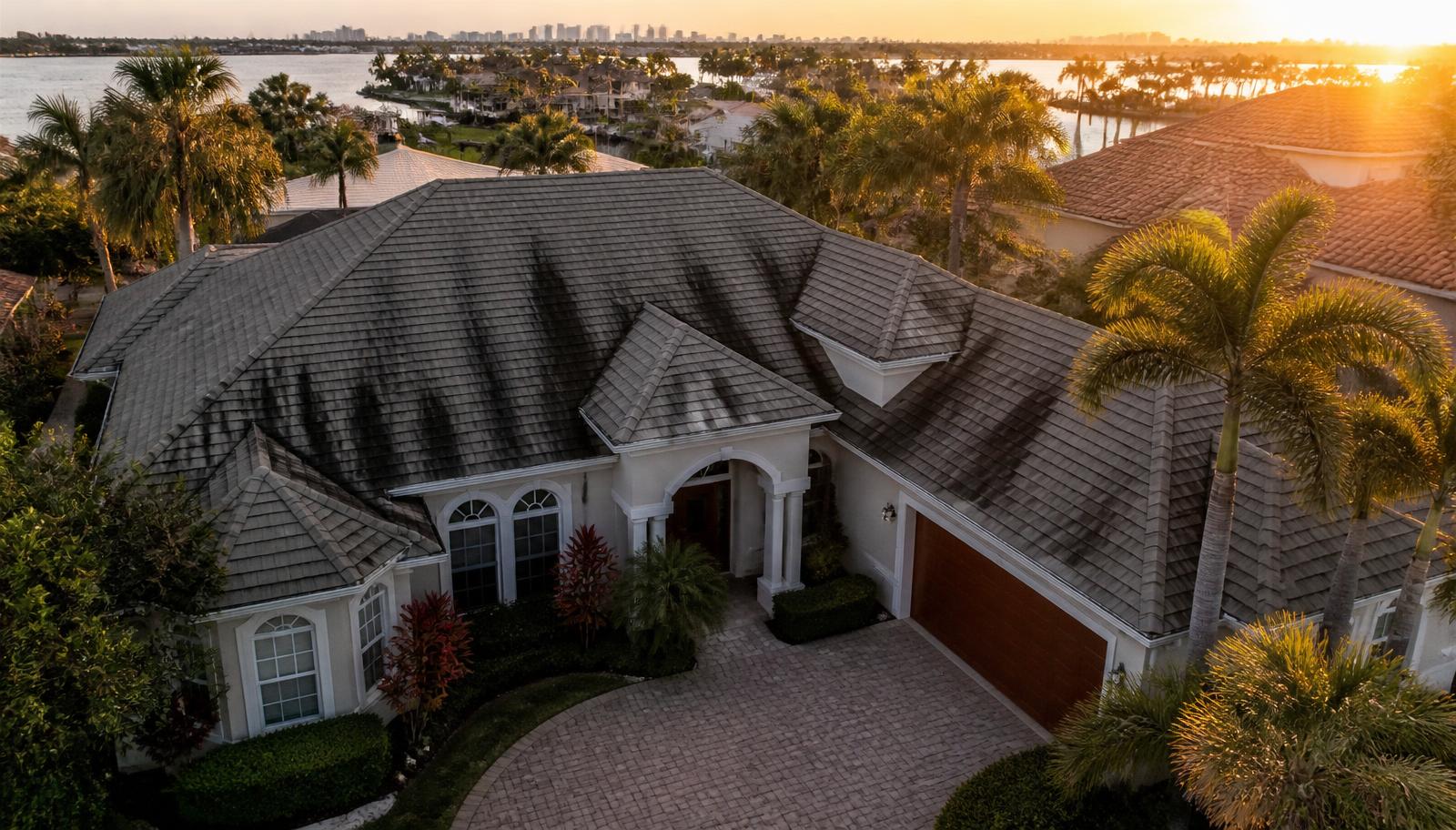
My Safe Florida Home comes up in a lot of Tampa Bay roofing conversations, usually because someone heard the state will pay for a new roof. The program is real, and it can cover a meaningful share of a replacement. The rules are narrower than the pitch, though, and the order you do things in decides whether you get paid.
What is My Safe Florida Home?
My Safe Florida Home is a state program run by the Florida Department of Financial Services under section 215.5586 of the Florida Statutes. It has two parts. The first is a free wind mitigation inspection that documents how well your home would hold up in a hurricane and recommends upgrades. The second is a grant of up to $10,000 to help pay for those upgrades. The program runs on money the Legislature sets aside, so availability can change from one budget year to the next. As of October 15, 2026, the program's website still advertises $10,000 grants.
Does My Safe Florida Home pay for a roof replacement?
It can, under one condition: the roof covering has to be replaced in order to install one of the roof upgrades the program pays for. Those upgrades are:
- Secondary water resistance: a sealed layer over the roof deck seams that keeps water out if shingles or tile blow off.
- Stronger roof deck attachment: the plywood is re-nailed to current code so it stays on the trusses in high wind.
- Roof-to-wall connections: the clips or straps that tie the roof framing down to the walls.
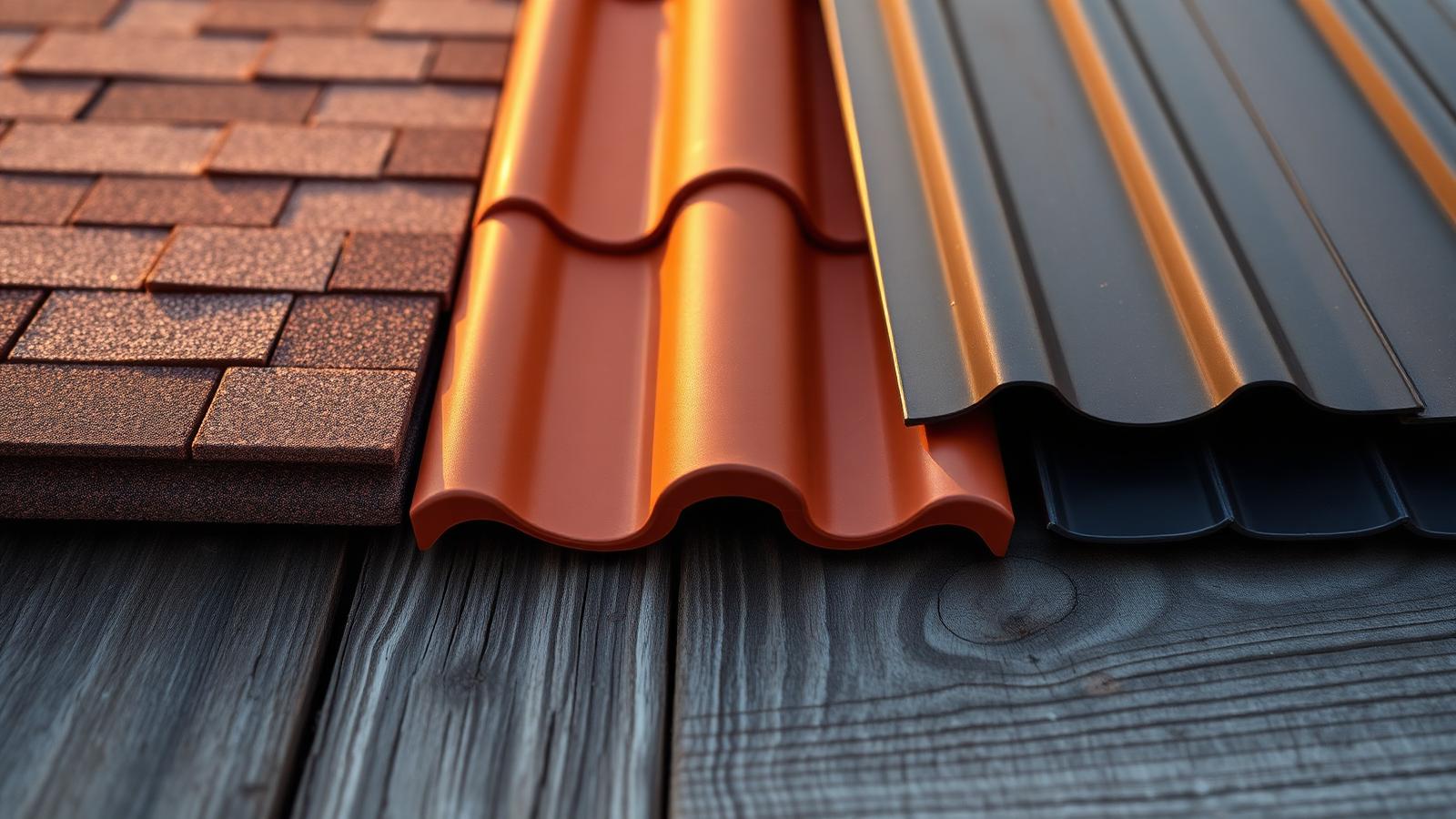
On most Tampa Bay homes, you can't add secondary water resistance or re-nail the deck without tearing off the old roof first. When that's the case, the program's own guidance says the cost of the new covering can be funded, and you choose the material: shingle, tile or metal. What doesn't qualify is a straight reroof with no wind upgrade, or patching and other partial repairs.
Who qualifies for the grant?
The free inspection is open to owners of homesteaded, site-built single-family homes. The grant has more requirements. Under the 2026 statute and the program's FAQs, the home must:
- Be your primary residence with a homestead exemption. Rentals and second homes don't qualify.
- Be a site-built single-family home on its own parcel. Townhomes up to three stories count; mobile and manufactured homes don't.
- Have been built before January 1, 2008, according to the county property appraiser.
- Have an insured value of $700,000 or less.
- Have had a My Safe Florida Home inspection within the 24 months before you apply for the grant.
- Belong to a low-income or moderate-income household.
That 2008 cutoff matters a lot in Tampa Bay. Most homes in older neighborhoods like Seminole Heights, Carrollwood and the 1980s lakefront streets around Lake Padgett were built well before it. In Wesley Chapel, where many homes went up between 2000 and 2015, and in newer Land O' Lakes communities, it comes down to the year on your property appraiser record.
Low income means at or below 80 percent of the area median income, and moderate income means less than 120 percent. Florida Housing Finance Corporation's 2026 limits for the Tampa metro area, which covers Hillsborough, Pasco and Pinellas counties, give a close guide:
| Household size | Low income (no match) | Moderate income (2-to-1 match) |
|---|---|---|
| 1 person | Up to $64,250 | Under $96,360 |
| 2 people | Up to $73,400 | Under $110,040 |
| 3 people | Up to $82,600 | Under $123,840 |
| 4 people | Up to $91,750 | Under $137,640 |
Treat these as a guide. The program confirms your income category with its own figures when you apply, and the limits change every year.
How much of a new roof will the grant cover?
For moderate-income homeowners, the state pays $2 for every $1 you put in, up to $10,000 from the state. That means a project needs at least $15,000 in eligible costs to get the full $10,000. Low-income homeowners can receive up to $10,000 without a match. Here is how that plays out across the shingle replacement prices we quote for typical Tampa homes:
| Eligible project cost | Grant (moderate income) | You pay (moderate) | Grant (low income) | You pay (low) |
|---|---|---|---|---|
| $12,000 | $8,000 | $4,000 | $10,000 | $2,000 |
| $15,000 | $10,000 | $5,000 | $10,000 | $5,000 |
| $18,000 | $10,000 | $8,000 | $10,000 | $8,000 |
| $22,000 | $10,000 | $12,000 | $10,000 | $12,000 |
These numbers assume the whole roof counts as eligible. Your approved scope may be smaller, and because tile and metal roofs cost more, the $10,000 cap covers a smaller share of them.
The money also arrives after the work, not before. For a matching grant, you pay the contractor, the work passes its final inspection, and then you submit a draw request with a paid-in-full invoice. The state mails the check. Low-income grants are also paid after the work is done, but the program doesn't require a paid-in-full invoice first. Either way, plan how you'll cover the cost in the meantime, whether that's savings or roof financing.
How do you apply, step by step?
- Create an account on the My Safe Florida Home participant portal at mysafeflhome.com.
- Fill out the prioritization questionnaire. The program places applicants in groups, and low-income homeowners 60 and older go first.
- When your group is called, complete the inspection application. The program assigns a licensed wind mitigation inspector it contracts with.
- Review your inspection report. It lists the upgrades your home is eligible for.
- Apply for the grant, naming your contractor and their Florida license number.
- Wait for approval before any work starts.
- Finish the work and request a final inspection within 18 months of approval.
- After the final inspection, submit your draw request to get paid.
What mistakes cost homeowners the grant?
- Starting work before approval. The program's FAQ is blunt: beginning work before approval disqualifies you from reimbursement.
- Asking it to pay for a patch. Partial repairs don't qualify, even after a storm.
- Letting the clock run out. If the work and final inspection aren't done within 18 months of approval, the application is treated as abandoned and the money goes back to the state.
- Hiring the wrong contractor. According to the program's FAQ, the contractor must hold a certified or registered Florida license as a general, building, residential, roofing or specialty contractor. The program no longer keeps a list of approved contractors, so check the license yourself with the Department of Business and Professional Regulation.
- Letting the inspection go stale. The grant application has to come within 24 months of your inspection.
Will the upgrades lower your insurance too?
Usually, yes. Florida law requires insurers' rates to include discounts or credits for construction features shown to reduce wind losses, and secondary water resistance, roof deck attachment and roof-to-wall connections are all rated on the state's wind mitigation form (OIR-B1-1802). Grant recipients also agree to share their insurance discount information with the state. Once the work passes final inspection, send your insurance agent the program's final inspection report and ask for a re-rate. Our post on Florida roof insurance requirements explains how those credits work.
Should you wait for the grant if your roof is already failing?
Not always. The program doesn't publish a timeline from questionnaire to approval, and it depends on funding and your priority group. If your roof is actively leaking, or your insurer has sent a non-renewal notice with a deadline, ask your agent how long you have before you plan around the grant. If you have time and you qualify, waiting for approval can be worth up to $10,000. If you don't, a grant that arrives after your policy lapses doesn't help.
Where these rules come from
We checked these details on October 15, 2026, against section 215.5586 of the 2026 Florida Statutes, the My Safe Florida Home FAQs and roof guidance at mysafeflhome.com, the state's OIR-B1-1802 wind mitigation form, and Florida Housing Finance Corporation's 2026 income limits (effective May 1, 2026). The program changes with each legislative session, so confirm current rules and funding on the official site before you plan a project around it.
Frequently asked questions
Will My Safe Florida Home pay for a whole new roof?
Not on its own. The grant can go toward a full replacement only when the old roof covering has to come off to install secondary water resistance, stronger roof deck attachment or roof-to-wall connections. The state's share tops out at $10,000, so on most Tampa Bay homes it covers part of the roof, not all of it.
Is the My Safe Florida Home inspection really free?
Yes. The program's FAQ says the wind mitigation inspection is free and carries no obligation to apply for a grant. The home still has to be a homesteaded, site-built single-family home.
Can I get reimbursed for a roof I already replaced?
No. Work has to be approved before it starts, and the program says beginning work before approval disqualifies you from reimbursement.
My house was built in 2009. Can I still get the grant?
No. Grant homes must have been built before January 1, 2008, according to the county property appraiser. You may still be able to get the free inspection, and its report may help you claim wind mitigation discounts on your insurance.
Do I have to hire a contractor from an approved list?
No. The program no longer keeps a list of approved contractors. According to the program's FAQ, your contractor needs a certified or registered Florida license as a general, building, residential, roofing or specialty contractor, and you name them and their license number on your grant application.
Can a rental property or second home qualify?
No. The home must be owner-occupied with a homestead exemption, which means it has to be your primary residence.
Get the real answer for your roof.
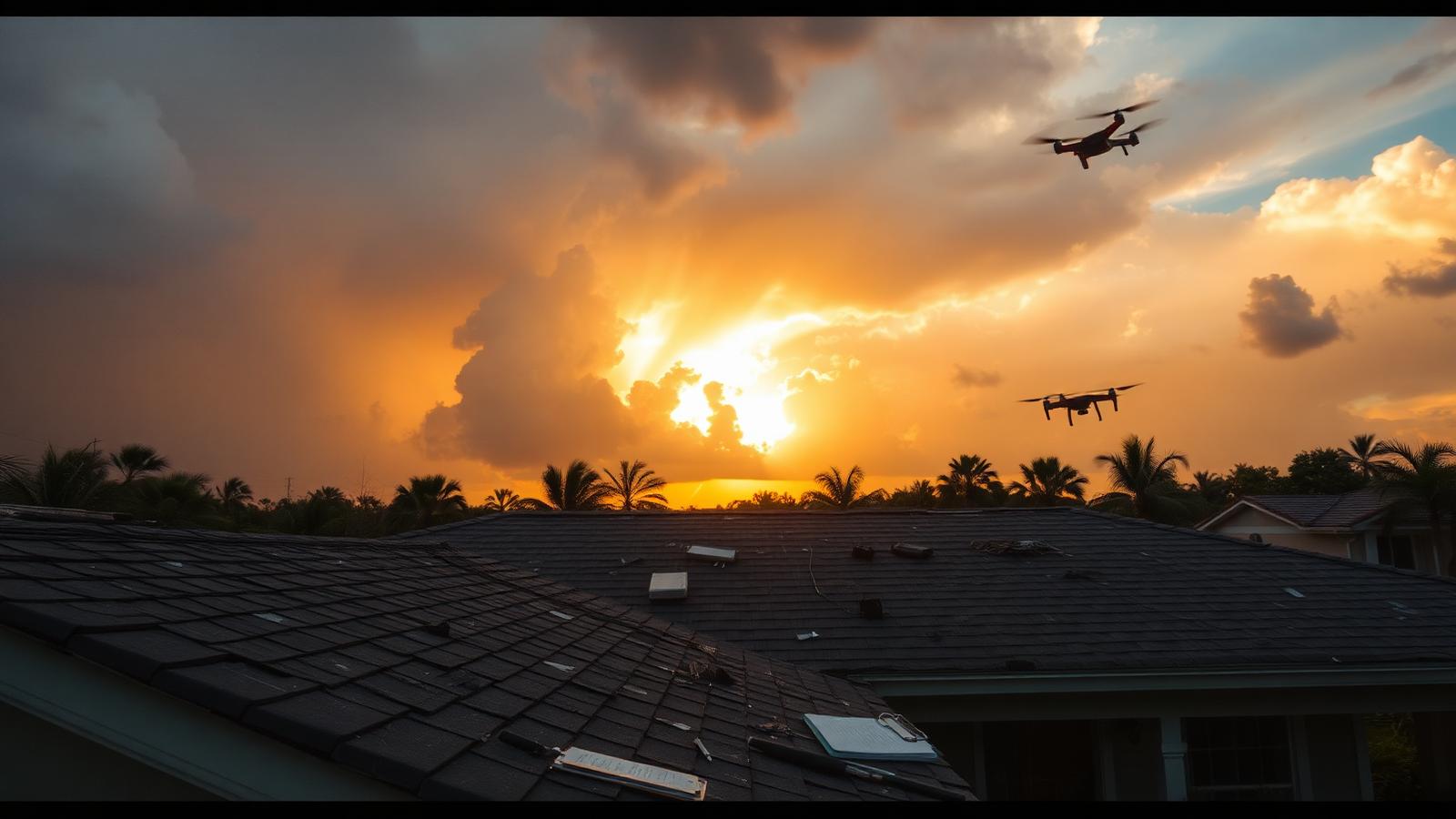
The Roof Pack(Edge) Report is a drone-documented inspection with photos, a remaining-life estimate and a written scope. No pressure. You keep it either way.
Tell us about your roof.
Takes 90 seconds. We'll text or call within the hour.